Skip to main content


Clean Makeup for Sensitive Skin: What to Look For and What to Avoid
Sensitive skin does not mean you cannot wear makeup. Sensitive skin means the wrong makeup punishes you for trying.
Redness after applying foundation. Itching around the eyes. Breakouts that appear within hours of wearing a new product. For reactive skin, these are not random events. Most makeup-related sensitivity reactions trace back to a short list of known irritants, ingredients that serve no functional purpose in the formula but show up in the vast majority of conventional cosmetics.
Clean makeup for sensitive skin starts with removing those irritants entirely, then building a routine around ingredients that actively calm, hydrate, and protect rather than provoke.
What Actually Triggers Sensitive Skin Reactions in Makeup
The pigments and minerals that give makeup its color are rarely the problem. Sensitivity reactions are almost always caused by the supporting ingredients around them.
The Top Irritants in Conventional Makeup
Here are the most common triggers for makeup-related skin reactions, and why each one causes problems:
| Ingredient | Function in Formula | Why Sensitive Skin Reacts |
|---|---|---|
| Synthetic fragrance | Scent appeal only | Most common cosmetic allergen; can contain hundreds of undisclosed compounds |
| Parabens | Preservative | Linked to skin irritation and endocrine disruption concerns |
| Sulfates | Foaming/cleansing agent | Strips the skin's natural moisture barrier |
| Phthalates | Plasticizer, fragrance fixative | Skin irritation, regulatory concern in multiple countries |
| Talc | Filler, texture agent | Contamination concerns; can clog pores and increase inflammation |
| Silicones | Smoothing, slip agent | Occlusive on sensitive skin; traps bacteria and sebum |
Why "Gentle" on the Label Is Not Enough
A product labeled "gentle" or "for sensitive skin" can still contain synthetic fragrance, parabens, or sulfates. The front of the package is marketing. The ingredient list on the back is the only reliable source of information. Brands that publish a full ingredient glossary and specify exactly what they exclude provide the transparency that sensitive skin makeup brands should be held to.
RMS Beauty bans over 2,700 ingredients from every formula and discloses every component, including fragrance ingredients, on each product page. No "fragrance" or "parfum" hiding undisclosed compounds.
What Non-Comedogenic Makeup Means and Why Reactive Skin Needs It
Non-comedogenic makeup is formulated not to clog pores. For sensitive skin, that distinction matters beyond breakout prevention.
Clogged Pores Trigger Inflammation
When pores are blocked, the resulting congestion creates an inflammatory response. On reactive skin, that inflammation compounds whatever sensitivity already exists, turning a minor breakout into visible redness, swelling, and irritation that lasts far longer than it should.
How Non-Comedogenic Testing Works
A non-comedogenic product has been tested to confirm the formula does not obstruct pores under normal use conditions. Not all "clean" products carry non-comedogenic certification. The claim has to be earned through testing, not assumed from a clean ingredient list. For a deeper look at how this testing works and what it means for your routine, the non-comedogenic makeup guide covers the full standard.
Building a Sensitive-Skin-Safe Routine, Step by Step
The best makeup for sensitive skin is not one product. A full routine where every step avoids known irritants and supports the skin barrier creates a cumulative effect that a single clean product in an otherwise conventional lineup cannot match.
Primer for Sensitive Skin
ReEvolve Radiance Locking Primer is formulated without synthetic fragrance and is non-comedogenic. Hyaluronic Acid draws moisture into the skin while Vegetable Squalane reinforces the moisture barrier, two functions that reactive skin needs from every product it touches. Tightenyl™, a natural retinol alternative, firms and smooths without the irritation that conventional retinol can cause on sensitive complexions. Water-based, silicone-free, KIND TO BIOME® certified, and clinically tested to support the skin's natural microbiome.
Concealer for Sensitive Skin
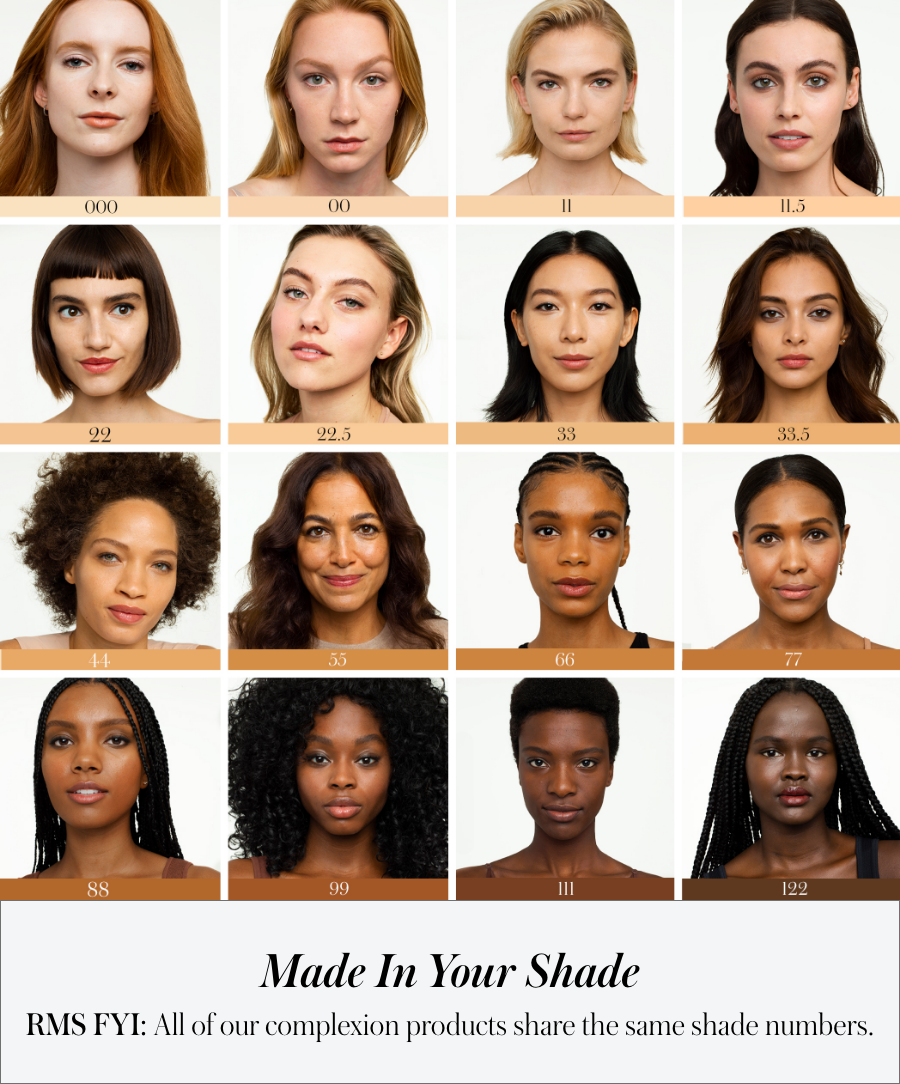
UnCoverup Concealer is a lightweight, buildable, non-comedogenic cream concealer available in 16 shades from light to deep. The formula is built on three calming base ingredients:
- Organic Raw Coconut Oil (cold-centrifuged, non-comedogenic) conditions and softens
- Organic Jojoba Oil mimics the skin's natural sebum for easy absorption
- Organic Cocoa Seed Butter delivers deep hydration without triggering congestion
No synthetic fragrance. No parabens. No talc. The concentrated formula melts into skin with fingertip warmth, providing sheer-to-medium coverage that corrects under eyes, blemishes, and redness without a heavy layer that traps heat or irritation underneath.
Sun Protection for the Sensitive Under-Eye Area
The under-eye area is the most reactive zone on most faces. Thinner skin, fewer oil glands, and constant movement make conventional SPF products a common irritation trigger around the eyes.
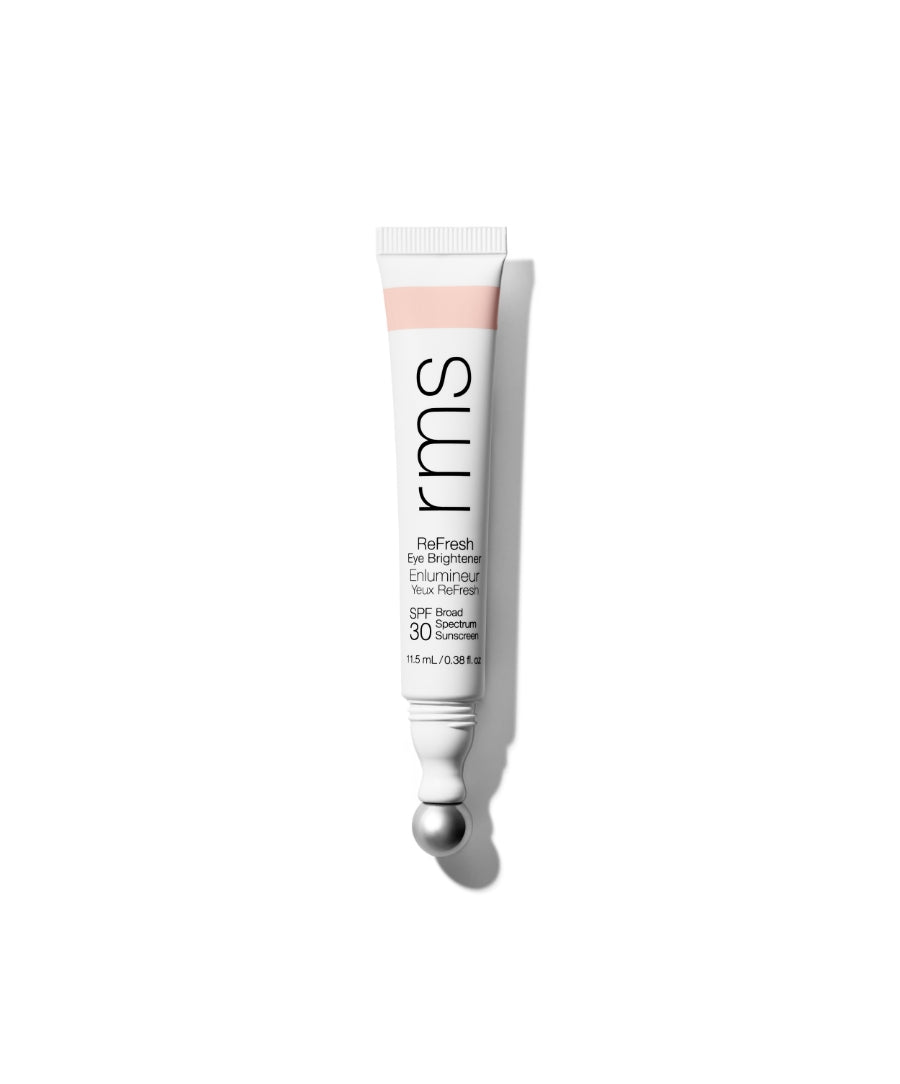
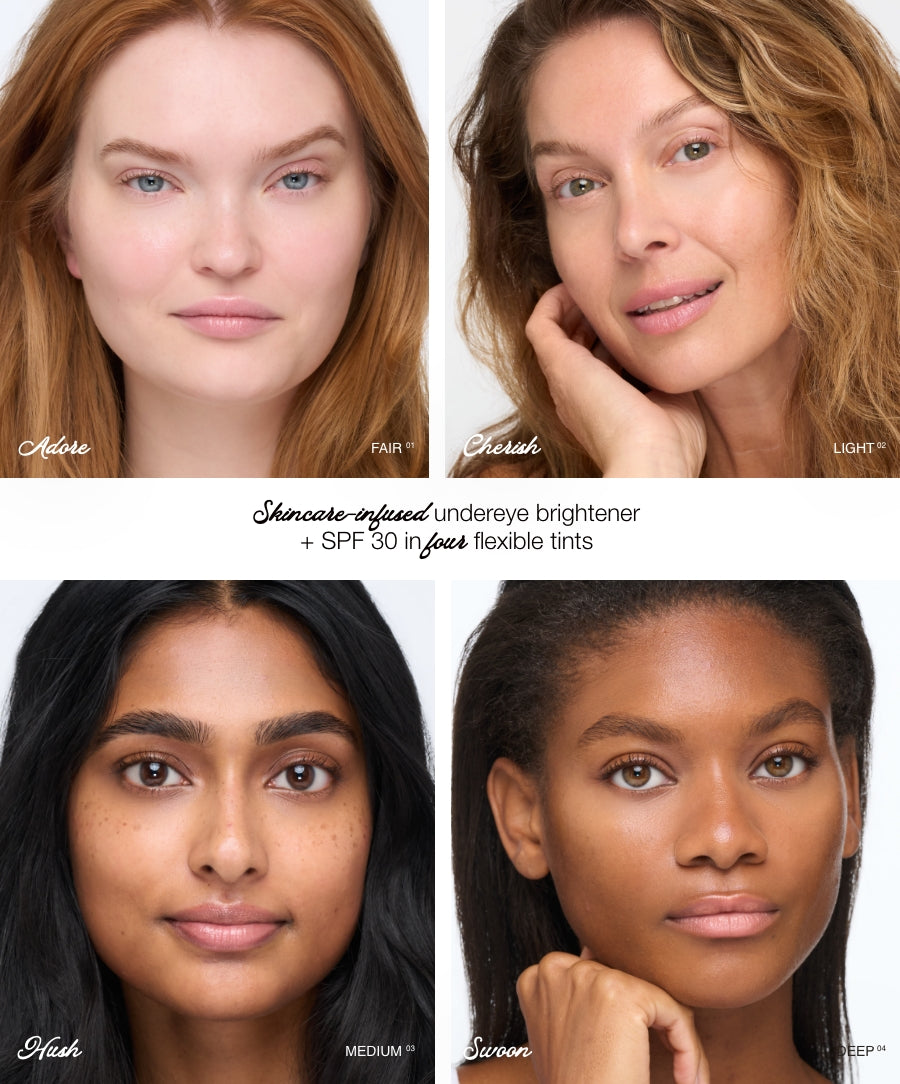
ReFresh Eye Brightener Broad Spectrum SPF 30 + Correcting Tint is hypoallergenic and ophthalmologist-tested, the only RMS product where those specific claims are published. Available in 4 flexible correcting tints for all skin tones. The 94% skincare-infused formula uses 100% mineral Non-Nano Zinc Oxide for broad-spectrum SPF 30 protection, along with GlowPlex™ for brightness and Tightenyl™ for firming. The cooling rollerball tip depuffs on contact. Safe for sensitive eyes and contact lens wearers.
For a full breakdown of mineral vs. chemical SPF and why mineral protection suits reactive skin, the sensitive skin sunscreen guide covers the distinction in detail.
What to Avoid Even in Products Labeled "Clean"
"Clean" is not a regulated term. Some brands use clean positioning as a marketing angle without meeting the transparency standard that clean makeup for sensitive skin actually requires.
Red Flags to Watch For
- "Fragrance" or "parfum" on the ingredient list without individual components disclosed
- "Clean-inspired" or "consciously formulated" without a published banned-ingredient list
- "Dermatologist recommended" without specifying whether the product was clinically tested for irritation
- "Natural" used as a standalone claim, since natural ingredients can still be irritating (essential oils at high concentrations, certain botanical extracts)
- Absence of non-comedogenic testing despite clean positioning
What Genuine Transparency Looks Like
A brand that meets the standard for sensitive skin makeup publishes a complete ingredient glossary, specifies every excluded ingredient category, carries non-comedogenic and dermatological testing results, and discloses exactly what "fragrance" means in each formula. RMS Beauty publishes its full ingredient glossary and bans over 2,700 ingredients from every product.
Final Thoughts
Clean makeup for sensitive skin is not about finding the single gentlest product. A routine where every step, from primer to SPF, avoids synthetic fragrance, parabens, sulfates, phthalates, and talc creates a compounding benefit that a single swap cannot replicate.
RMS Beauty formulates without all of those ingredients across the entire line. ReEvolve Radiance Locking Primer anchors the routine with hydration and non-comedogenic grip. UnCoverup Concealer corrects without congestion. ReFresh Eye Brightener SPF 30, hypoallergenic and ophthalmologist-tested, protects the most reactive area on your face. Every ingredient disclosed. Every formula tested. Skin that finally stops reacting.
Shop ReEvolve Radiance Locking Primer →
FAQs
What makeup ingredients should sensitive skin avoid?
Synthetic fragrance, parabens, sulfates, phthalates, and talc are the most common triggers. RMS Beauty formulates without all five across every product in the line.
Is RMS Beauty safe for sensitive skin?
RMS formulates without parabens, synthetic fragrances, sulfates, phthalates, GMOs, gluten, and talc across the full product range. ReFresh Eye Brightener SPF 30 is additionally hypoallergenic and ophthalmologist-tested, the only RMS product carrying those specific claims.
What is the difference between non-comedogenic and hypoallergenic?
Non-comedogenic means a product is formulated not to clog pores. Hypoallergenic means the formula is designed to minimize allergic reaction risk. RMS uses non-comedogenic formulations across its range, with the hypoallergenic designation specific to ReFresh Eye Brightener SPF 30.
Can sensitive skin wear foundation every day?
Yes, provided the formula is non-comedogenic, free of common irritants, and hydrating rather than mattifying. However, we recommend doing a patch test or consulting a dermatologist before choosing a product in case you have any skin issues.
Why does mineral SPF work better for sensitive skin than chemical SPF?
Mineral SPF (Non-Nano Zinc Oxide) sits on top of the skin and physically reflects UV rays. Chemical SPF absorbs into the skin and converts UV energy into heat, which can trigger irritation and redness on reactive complexions.
How do I know if my makeup is causing a skin reaction?
Reactions typically appear within hours of application as redness, itching, tightness, or small bumps. Patch-test new products on the inner wrist or behind the ear for 24 hours before applying to the face. If a reaction occurs, check the ingredient list for synthetic fragrance, parabens, or sulfates as the likely cause. We also recommend consulting a doctor in case of any serious reactions.
Shop The Blog
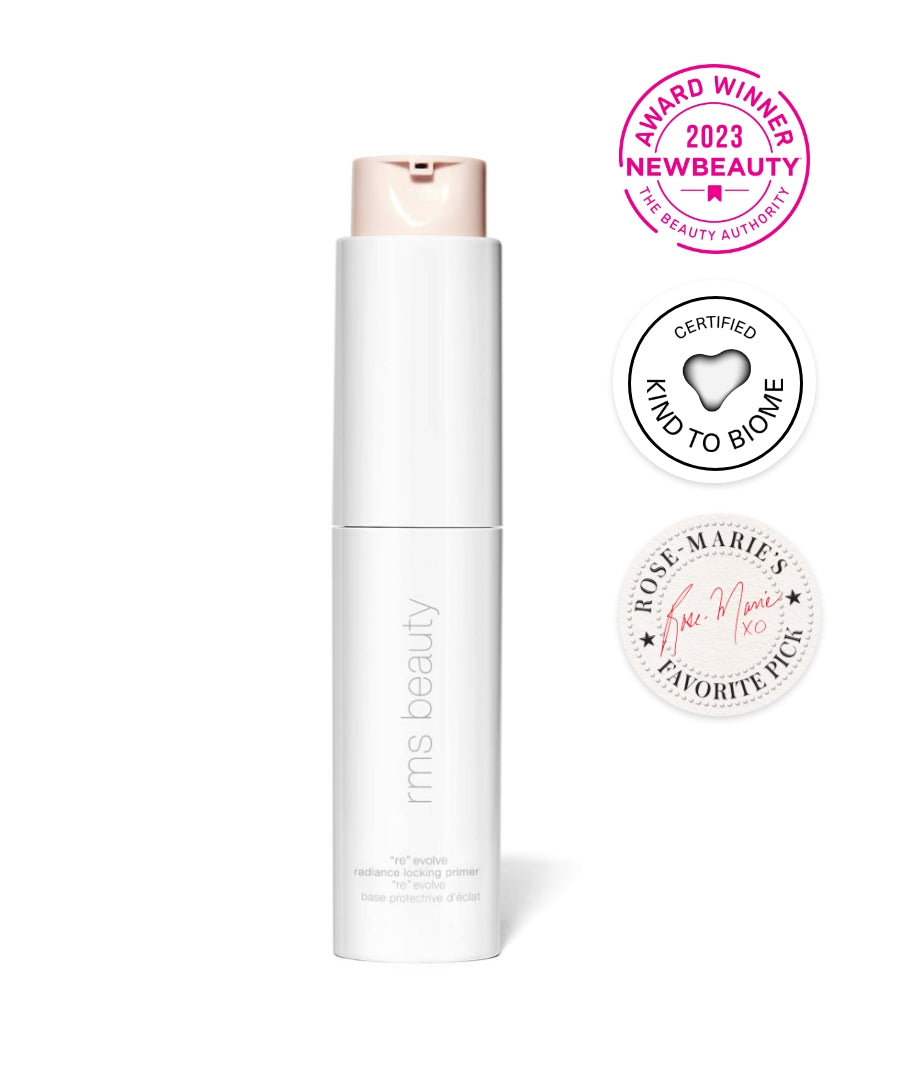
ReEvolve Radiance Locking Primer

UnCoverup Concealer
ReFresh Eye Brightener Broad Spectrum SPF 30 + Correcting Tint