Skip to main content


How Often Should You Reapply Sunscreen?

You put on sunscreen this morning. Good. But if you’re reading this in the afternoon, that single application is not protecting you anymore. Sunscreen breaks down. Sweat dissolves it. Friction from touching your face wipes it away.
The question is not whether you should reapply, but how often you need to do so to keep your skin genuinely protected throughout the day.
The short answer is every two hours. The longer answer depends on what you are doing, what type of sunscreen you are using, and where you tend to forget coverage entirely.
How Often Should You Apply Sunscreen During the Day
Most dermatologists agree on one universal recommendation: Reapply your SPF every two hours during any period of UV exposure. But two hours is a baseline, not a blanket rule. Several factors can shorten that window considerably.
The Two-Hour Rule for Daily Wear
For regular daily activity with no heavy sweating or water exposure, reapplying every two hours provides consistent UV defense. A mineral-based daily sunscreen with Non-Nano Zinc Oxide sits on top of the skin, acting as a physical shield against both UVA and UVB rays. Because mineral formulas do not absorb into the skin the way chemical sunscreens do, you get protection the moment you apply.
Pro Tip: Setting an alarm or tying reapplication to a routine event, like lunch or an afternoon break, helps build the habit.
When Sweat and Water Speed Things Up
Water and perspiration can strip sunscreen from the skin faster than normal wear. If you are swimming, exercising outdoors, or simply dealing with a hot day, reapply every 40 to 80 minutes, depending on the water resistance rating of your product. Even water-resistant sunscreens lose effectiveness after prolonged exposure to moisture.
Adjusting for Indoor vs. Outdoor Time
UVA rays can pass through glass. If you work near windows or drive regularly, your skin still receives UV exposure indoors. On fully indoor days with minimal window exposure, you may not need to reapply as frequently. But on days when you move between indoor and outdoor settings, maintaining the two-hour reapplication schedule keeps protection consistent.
A lightweight tinted moisturizer with SPF makes midday reapplication seamless. Products formulated with skincare ingredients like GlowPlex™, a complex of natural peptides that smooth and brighten skin, double as both sun protection and complexion care.
Why Reapplying Sunscreen Matters More Than SPF Level
A common misconception is that higher SPF means longer protection. SPF 50 does not last longer than SPF 30. SPF measures the degree of UVB filtration, not the duration of protection. Whether you wear SPF 30 or SPF 50, you still need to reapply at the same intervals.
SPF Numbers and What You Actually Get
SPF stands for Sun Protection Factor, and the SPF numbers indicate how much UVB radiation is filtered:
-
SPF 15 filters approximately 93% of UVB rays
-
SPF 30 filters approximately 97% of UVB rays
-
SPF 50 filters approximately 98% of UVB rays
The difference between SPF 30 and SPF 50 is roughly 1%. No SPF level blocks 100% of UV radiation. The takeaway is that consistent reapplication matters far more than chasing a higher number on the bottle.
Remember to check the PA rating as well. Check out our comprehensive guide on PA ratings to understand your sunscreen protection better.
What Happens When Protection Fades
Once sunscreen breaks down, skin is directly exposed to UV damage. Over time, unprotected exposure contributes to premature aging, uneven skin tone, dryness, and increased risk of skin-related concerns. A single missed reapplication will not cause permanent damage, but repeated gaps in coverage add up.
Areas like the undereye region are especially vulnerable. The skin there is thinner and more prone to visible damage. An undereye SPF with correcting tint helps protect that delicate zone while addressing dark circles and puffiness, making it easier to maintain protection where most people forget.
Mineral vs. Chemical Sunscreen and Reapplication
Mineral sunscreens use ingredients like Non-Nano Zinc Oxide that sit on top of the skin and physically deflect UV rays. Chemical sunscreens absorb into the upper layers of skin and convert UV radiation into heat.
For reapplication, mineral sunscreens have a practical advantage. Because they work on contact, you get immediate protection each time you apply, with no 15-to-20-minute wait time that chemical formulas require. Mineral formulas also provide defense against blue light, which chemical options typically do not address.
How to Reapply Sunscreen Without Disrupting Your Routine
The biggest barrier to consistent reapplication is inconvenience. Nobody wants to redo a full skincare and makeup routine in the middle of the day. The good news is that reapplying does not require starting from scratch.
The Two-Finger Method for the Right Amount
A simple way to measure the correct amount of sunscreen for your face and neck is the two-finger method. Squeeze two lines of product directly onto your index and middle finger, from base to tip. That amount provides adequate coverage without over-applying.
More product does not equal more protection. Even, thorough coverage is what matters. A hydrating primer formulated with Tightenyl™, a gentle retinol alternative that firms and smooths skin, creates a base that helps sunscreen apply smoothly and sit well on the skin throughout the day.
Layering SPF Over Your Routine
Reapplying over makeup is simpler than most people expect. Lightweight, sheer mineral SPF formulas blend over existing makeup without disrupting coverage. Pat the product gently onto skin rather than rubbing, which helps preserve what is already in place.
For the eye area specifically, an eye cream with a rollerball applicator and built-in SPF protection allows targeted reapplication without smudging concealer or eyeshadow. Small, specific tools make midday touch-ups practical.
Protecting Overlooked Areas
When reapplying, most people focus on cheeks and forehead while neglecting the ears, jawline, back of the neck, and chest. Sunburn patterns on these areas are a clear sign that reapplication coverage is incomplete.
A quick checklist for thorough reapplication:
- Forehead, nose, and cheeks (the obvious zones)
- Ears and the skin behind them
- Jawline and chin
- Back of the neck, especially if hair is up
- Chest and decolletage if exposed
- Hands, which are washed frequently and lose SPF coverage fast
Final Thoughts
How often should you apply sunscreen? Every two hours, minimum. More frequently when sweating, swimming, or toweling off. And the type of sunscreen you choose makes a real difference in how that reapplication feels.
Mineral formulas with Non-Nano Zinc Oxide offer immediate protection, blue light defense, and a clean ingredient profile that works with your skin rather than against it. RMS Beauty's SPF lineup is formulated with skincare-grade ingredients, from GlowPlex™ to Vegetable Squalane, so reapplication is not just about protection. Your skin actually benefits every time you layer it on.
Shop mineral sunscreen with skincare benefits and make reapplication the easiest part of your routine.
Frequently Asked Questions
Q. How often should I reapply if I stay indoors?
On days spent mostly indoors away from windows, reapplication frequency can be reduced. If you sit near windows or move between indoor and outdoor environments, reapply every two hours as UVA rays penetrate glass.
Q. Does higher SPF mean I can reapply less often?
No. SPF measures the degree of UVB filtration, not duration. SPF 30 and SPF 50 both require reapplication every two hours for consistent protection.
Q. Can I apply sunscreen over makeup?
Yes. Lightweight mineral sunscreens with a sheer finish layer well over makeup. Pat the product on gently rather than rubbing to keep your base intact.
Q. How much sunscreen do I need for my face?
The two-finger method is a reliable guide. Squeeze two lines of sunscreen from the base to the tip of your index and middle finger. That amount covers the face and neck adequately.
Q. What is the difference between mineral and chemical sunscreen?
Mineral sunscreen uses ingredients like Non-Nano Zinc Oxide that sit on top of the skin and physically deflect UV rays. Chemical sunscreen absorbs into the skin and converts UV radiation into heat. Mineral formulas provide immediate protection without a waiting period.
Q. When should I reapply after swimming?
Reapply immediately after getting out of the water and toweling off. During extended water exposure, reapply every 40 to 80 minutes, depending on the water resistance rating of your product.
Shop The Blog
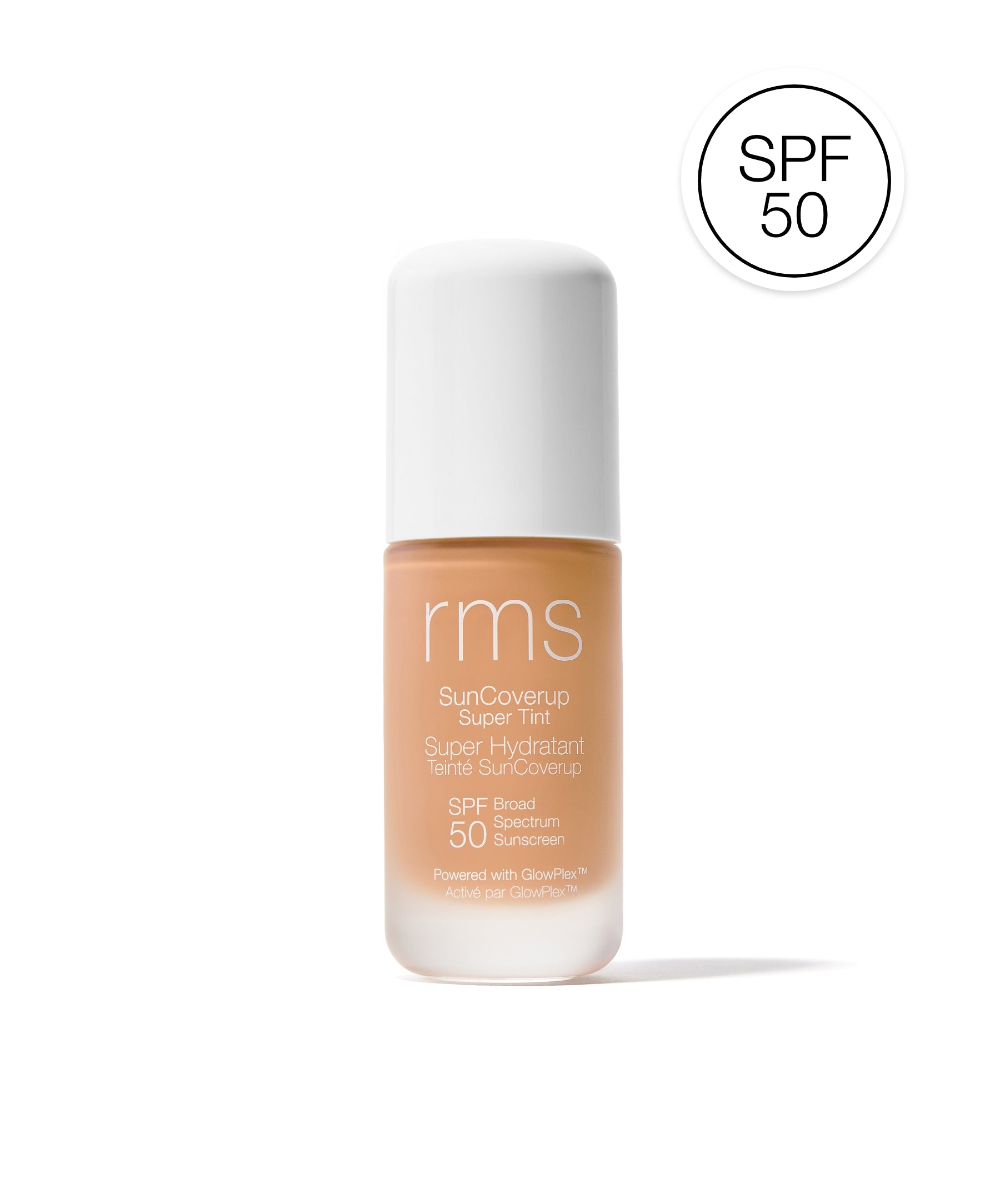
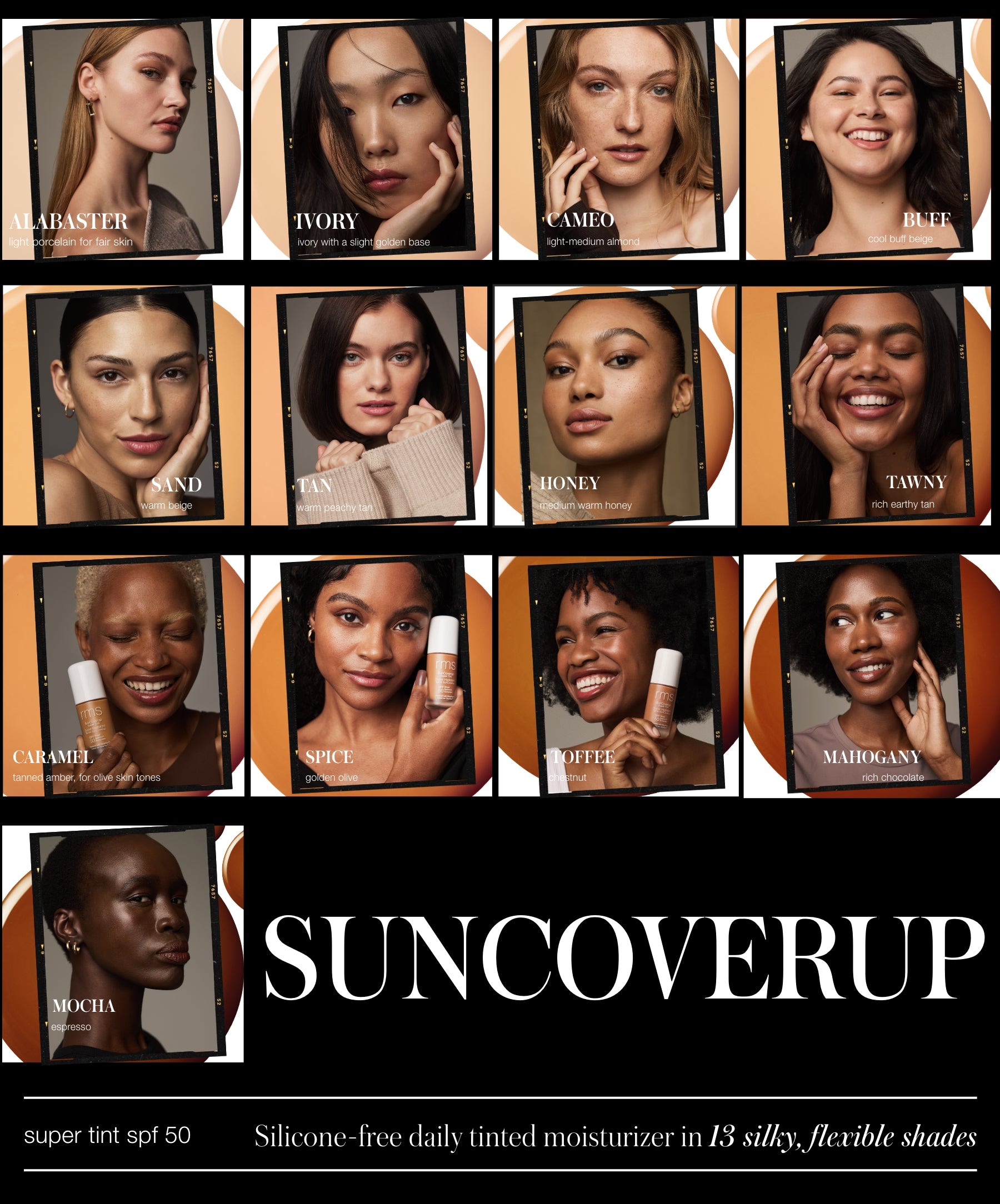
SunCoverup Super Tint Broad Spectrum SPF 50 Sunscreen
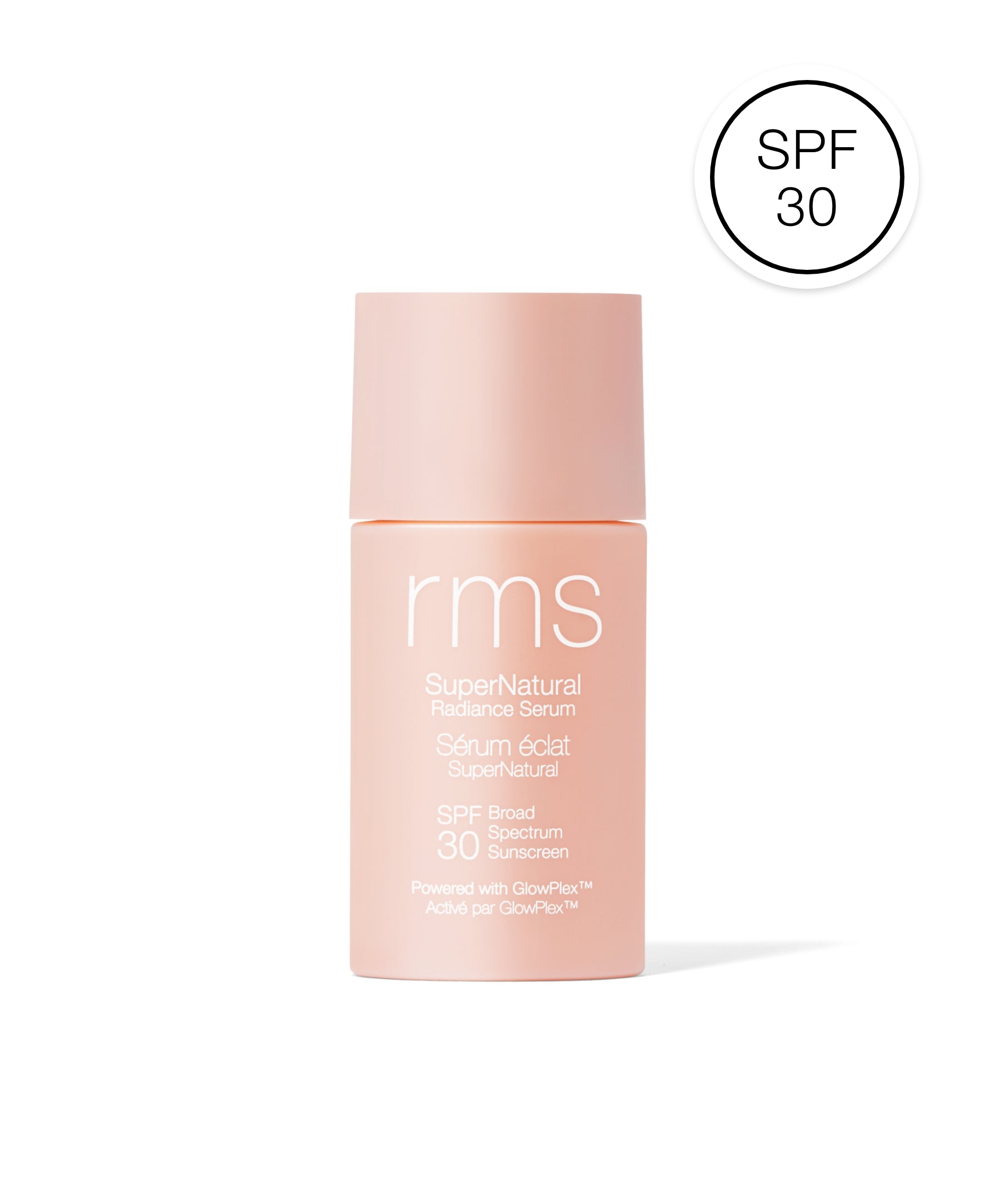
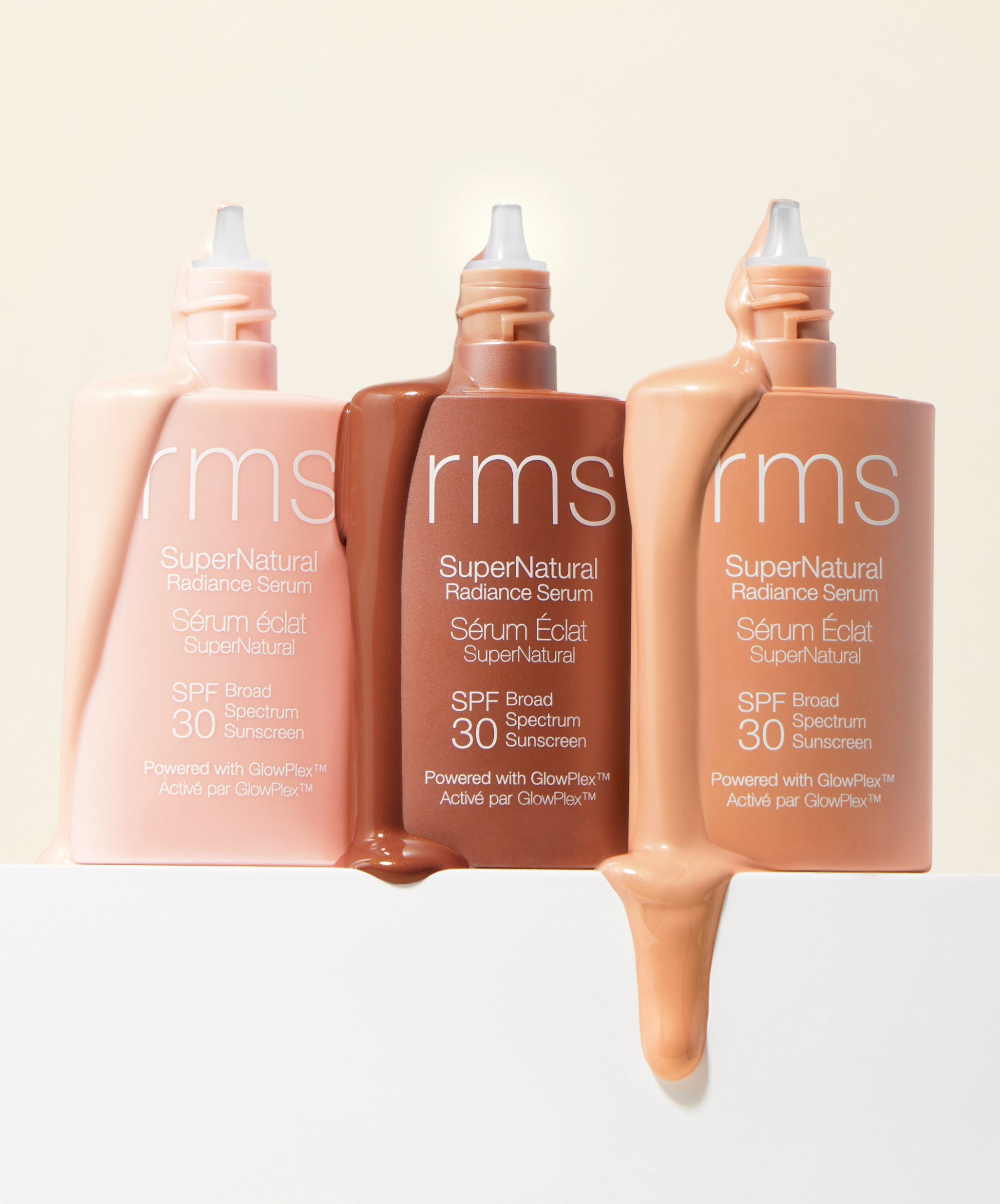
Supernatural Radiance Serum Broad Spectrum SPF 30 Sunscreen
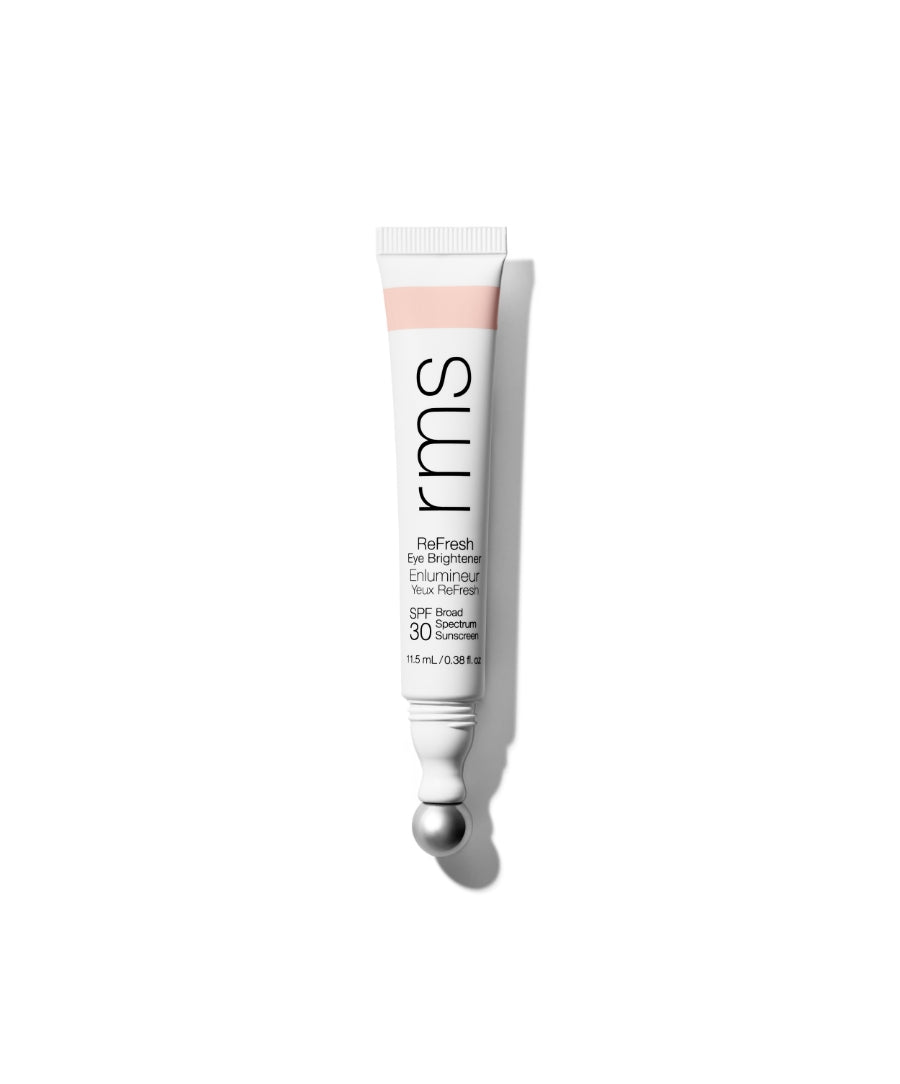
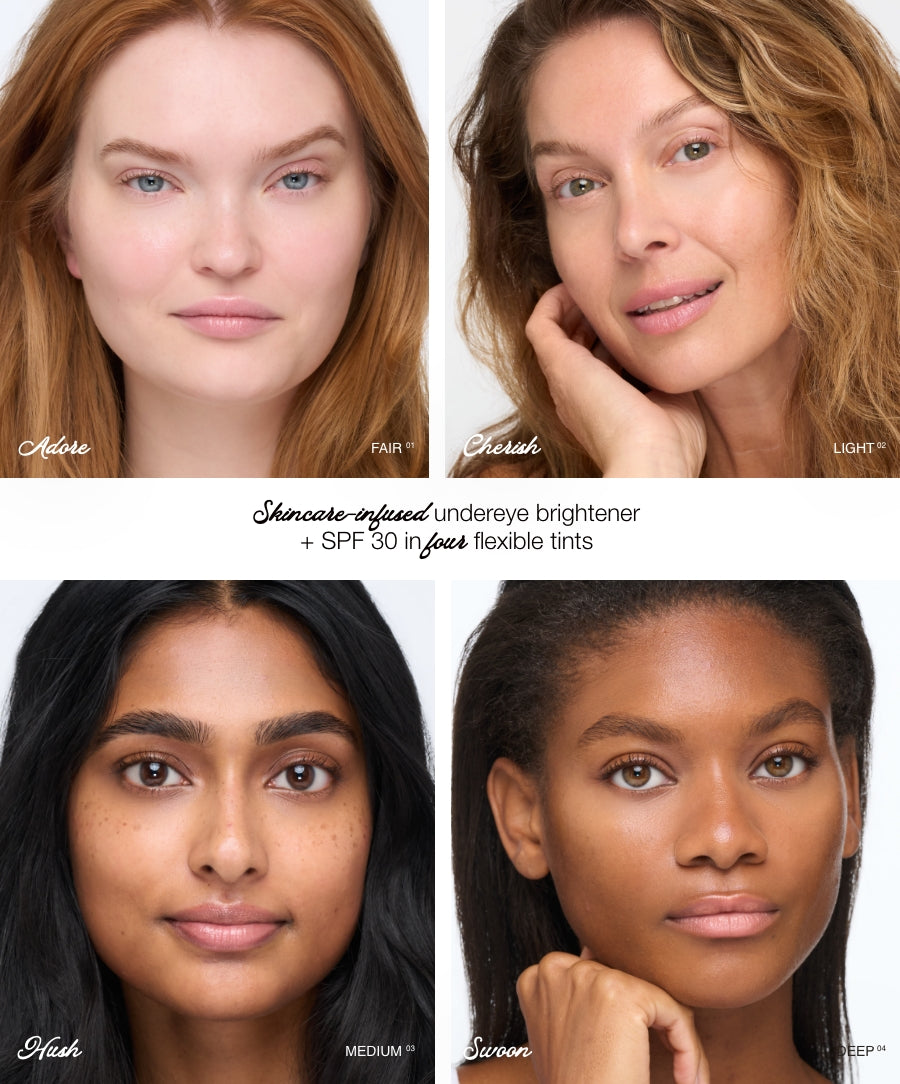
ReFresh Eye Brightener Broad Spectrum SPF 30 + Correcting Tint